Building Resilience in a Toxic Career Environment
Building Resilience in a Toxic Career Environment: Why Your Survival Instincts Might Be Working Against You
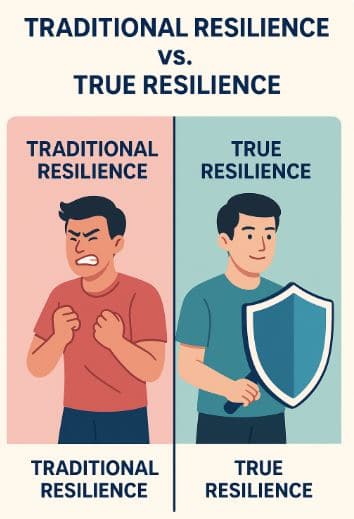 Something’s been bothering me about all the resilience advice floating around for people stuck in toxic workplaces. Most of it sounds like telling someone to “just think positive” while their house is on fire.
I’ve been fascinated by this disconnect for months now – watching people I care about follow every piece of conventional wisdom about workplace resilience, only to end up more exhausted and depleted than when they started. There’s this weird assumption that resilience means just… enduring more. But what if that’s completely backwards?
Here’s what I think is really happening: most resilience strategies actually teach you to ignore the very signals your body and mind are sending to protect you. That’s not resilience – that’s learned helplessness dressed up as strength.
The Problem With Traditional Resilience Thinking
Every conversation I have about toxic work environments includes the same elements. Someone describes feeling drained, anxious, maybe having trouble sleeping. Then they immediately follow up with “but I need to be more resilient” or “I should be able to handle this better.”
Wait. What if the exhaustion isn’t a personal failing? What if it’s your nervous system doing exactly what it’s supposed to do when faced with chronic stress?
I used to think resilience in toxic workplaces meant powering through, building thicker skin, developing coping mechanisms to stay functional in dysfunction. Until I kept seeing it fail repeatedly. People would master every breathing technique, develop perfect boundary scripts, optimize their self-care routines – and still end up completely burned out.
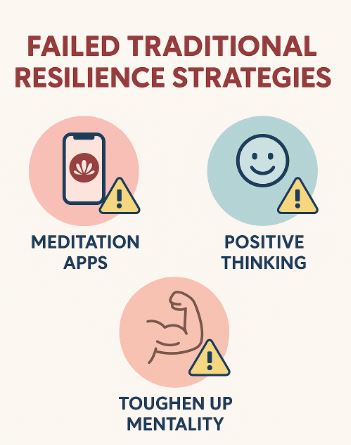
The more I’ve looked into this, the more I realize traditional resilience advice treats symptoms while ignoring the actual problem. It’s like taking pain medication for a broken bone and calling yourself tough for not limping.
What Actual Resilience Looks Like in Toxic Environments
Real workplace resilience isn’t about enduring more toxicity. It’s about maintaining your capacity to think clearly, make strategic decisions, and protect your long-term wellbeing while you navigate an unhealthy situation.
This is going to sound strange, but the most resilient people I’ve observed in toxic workplaces aren’t the ones who “handle it well.” They’re the ones who stay acutely aware of how the environment affects them and adjust their strategies accordingly.
Energy Management Over Energy Depletion
There’s enormous momentum behind toxic workplace dynamics. Once they get going, they create this constant low-level stress that feeds on itself. You start second-guessing everything, walking on eggshells, managing other people’s emotions while neglecting your own basic needs.
The people who maintain their resilience understand something crucial: you can’t out-willpower a toxic system. Instead, they focus on identifying where their energy goes and strategically conserving it.
This might mean:
- Setting micro-boundaries – not dramatic confrontations, but small daily choices to protect your mental space
- Limiting emotional labor – recognizing when you’re managing someone else’s dysfunction and consciously stepping back
- Creating psychological distance – developing internal narratives that separate your worth from workplace chaos
Building Your Reality Check System
Toxic environments are masters at making you question your own perception. Gas lighting, moving goalposts, inconsistent feedback – it’s like trying to navigate with a broken compass.
I’ve noticed that people who maintain their sanity in these situations develop what I call a “reality check system.” They create ways to validate their experiences outside the toxic bubble.
This could look like keeping a simple daily log of interactions, having regular conversations with trusted friends outside the organization, or working with a therapist who understands workplace trauma. The goal isn’t to build a case against anyone – it’s to maintain your grip on reality when everything around you is designed to make you doubt yourself.
This connects to the deeper patterns I explored in my guide to mindful self-reflection – documenting your experience helps you stay grounded in your own truth.
The Strategic Exit Mindset
Here’s something nobody talks about: true resilience in toxic environments often means preparing to leave, even if you can’t leave right now.
I know, I know. “Just quit” isn’t realistic advice when you have bills to pay. But there’s something powerful that happens when you shift from “how do I survive this forever” to “how do I position myself for better options.”

This mindset shift changes everything about how you engage with the toxicity. Instead of trying to fix unfixable situations or prove yourself to people who will never appreciate your efforts, you start focusing on what you can control: your skills, your network, your financial stability, your exit strategy.
Building Your Escape Velocity
From everything I’ve researched about people who successfully transitioned out of toxic workplaces, they all did certain things while still employed:
- Documented their achievements – keeping detailed records of projects, results, and positive feedback for future job applications
- Maintained external relationships – staying connected to former colleagues, industry contacts, and potential mentors
- Developed portable skills – focusing on learning things that would transfer to any organization
- Built financial cushions – even small emergency funds create psychological breathing room
The beautiful thing about preparing to leave is that it often makes staying more bearable. When you know you have options, the daily dysfunction feels less like a life sentence and more like a temporary inconvenience.
Your Body Knows Before Your Mind Does
 Maybe it’s just me, but I think we’ve become way too disconnected from our physical responses to stress. Your body is constantly giving you information about your environment – tension in your shoulders, changes in sleep patterns, that knot in your stomach before certain meetings.
These aren’t weaknesses to overcome. They’re intelligence to use.
Real workplace resilience means learning to read these signals early and respond strategically. Maybe that means taking a mental health day before you hit the wall. Maybe it means having a difficult conversation before resentment builds up. Maybe it means updating your resume when your Sunday night anxiety starts getting worse.
The Compound Effect of Small Protective Actions
This connects to something much deeper about how we maintain our wellbeing in challenging environments. It’s rarely the big dramatic moments that break us – it’s the accumulation of small compromises, the daily erosion of boundaries, the gradual acceptance of unacceptable treatment.
But the reverse is also true. Small protective actions, practiced consistently, create enormous momentum over time.
This might sound trivial, but I’ve seen people completely transform their experience in toxic environments just by:
- Taking actual lunch breaks away from their desk
- Setting specific times to check email instead of being constantly available
- Having one non-work conversation with a trusted person each day
- Ending their workday with a small ritual that creates closure
These aren’t revolutionary strategies. They’re basic human needs that toxic environments systematically erode. Protecting them isn’t selfish – it’s essential.
When Staying Becomes More Dangerous Than Leaving
Look, sometimes the most resilient thing you can do is acknowledge when an environment is actively damaging your mental health, relationships, or sense of self. There’s nothing brave about martyring yourself for an organization that doesn’t value your wellbeing.
I’ve been thinking about this a lot lately: we’ve somehow decided that enduring toxic treatment is more virtuous than protecting ourselves from it. But what if that’s exactly the mindset that allows toxic cultures to persist?
According to research from the Occupational Safety and Health Administration, workplace stress and toxic environments contribute to significant health problems and reduced productivity. Sometimes the data confirms what our bodies already know.
Every person who stays in a situation that’s harming them sends a message – to themselves and others – that this treatment is acceptable. Sometimes the most resilient act is refusing to be part of a system that thrives on people’s willingness to absorb dysfunction.
Building Resilience That Actually Protects You
At its core, this is really about developing the ability to maintain your wellbeing and decision-making capacity under pressure. Not the ability to tolerate more pressure indefinitely.
True resilience in toxic workplaces looks like:
- Staying connected to your values even when the culture pressures you to compromise them
- Maintaining perspective about what’s normal and healthy versus what you’re being asked to accept
- Preserving your capacity for joy and connection outside of work
- Making strategic decisions based on your long-term wellbeing, not just immediate survival
The goal isn’t to become invulnerable to toxic behavior. The goal is to maintain enough clarity and self-respect to respond in ways that protect your future, not just your paycheck.
For more comprehensive strategies on recognizing and responding to toxic workplace patterns, check out the Ultimate Guide to Self-Care Strategies where I dive deeper into the systemic approaches that support your wellbeing during challenging times.
Real workplace resilience is about protecting what matters most: your mental health, your relationships, your sense of possibility for the future. Everything else is just survival dressed up as strength.