Is Revenge Quitting Worth It? The Reality Check Nobody Talks About
Is Revenge Quitting Worth It? The Reality Check Nobody Talks About
Something’s been nagging at me about this revenge quitting trend everyone’s talking about. Social media makes it look empowering – finally sticking it to toxic bosses, walking out dramatically, coordinating mass exits that leave companies scrambling.
But then I started tracking what actually happens to people after the viral moment fades. The marketing manager who organized a team walkout and couldn’t find leadership roles for months afterward. The accountant who timed his exit to sabotage a major audit, then faced legal complications that cost more than his annual salary.
After investigating dozens of these situations, I discovered something that nobody talks about in the trending revenge quitting videos: the question isn’t whether bad employers deserve consequences. It’s whether revenge quitting actually delivers the satisfaction and outcomes people are hoping for.
The answer might surprise you.
What Makes People Ask “Is Revenge Quitting Worth It” Right Now
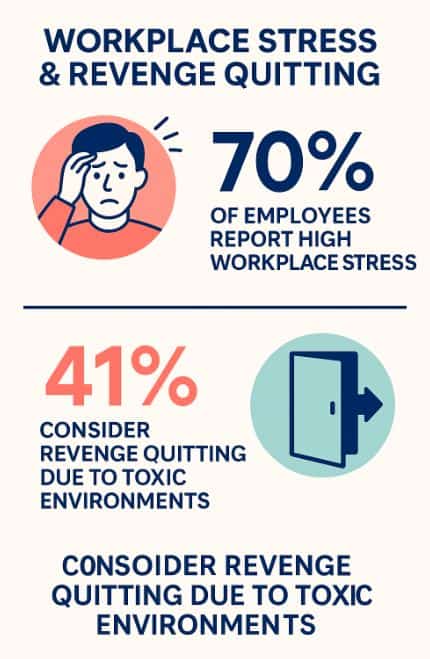 We’re living through a unique moment where employee leverage is higher than it’s been in decades. People are realizing they don’t have to tolerate abusive workplaces anymore. Social media amplifies stories of dramatic exits, making revenge quitting look like justified rebellion against toxic systems.
I get why the question “is revenge quitting worth it” resonates so strongly. When you’ve been micromanaged, undervalued, or outright abused at work, there’s something deeply appealing about finally having power in the situation.
Recent surveys show 65% of professionals report feeling “stuck” in their jobs, while workplace stress has reached record highs. That’s enormous pent-up frustration looking for an outlet.
According to Gallup’s State of the Global Workplace report, employee disengagement costs the global economy $7.8 trillion annually, creating conditions where revenge-based exits feel justified to many workers.
But understanding why revenge quitting feels tempting doesn’t automatically make it worth it. The question requires looking beyond the immediate emotional satisfaction to long-term consequences.
The Real Question Behind “Is Revenge Quitting Worth It”: What People Actually Want
When people ask if revenge quitting is worth it, they’re rarely asking about the specific act of leaving dramatically. They’re asking deeper questions:
“Will this finally make them understand how badly they treated me?” – The desire for recognition and validation of your experience.
“Can I get some power back in this situation?” – The need to feel agency after months of powerlessness.
“How do I make sure this doesn’t happen to other people?” – The protective instinct to prevent others from suffering.
“Will I feel better if I fight back instead of just leaving quietly?” – The hope that action will provide emotional closure.
These are completely understandable desires when you’ve been mistreated. The question is whether revenge quitting actually delivers on any of them.
Is Revenge Quitting Worth It? The Unfiltered Reality Check
After analyzing dozens of revenge quitting situations, here’s what actually happens in the months and years following dramatic workplace exits.
The Immediate Satisfaction Is Real But Brief
People who revenge quit consistently report an initial rush of empowerment. Finally taking action, seeing shock on management faces, feeling like they “won” for once.
But that satisfaction typically lasts days or weeks, not months or years. What replaces it varies dramatically based on how the situation unfolds.
The Career Consequences Are Often Severe and Long-Lasting
Your industry is smaller than you think. That dramatic exit story follows you through networking events, reference checks, and casual conversations with potential employers.
I know someone who coordinated a walkout at a tech startup two years ago. She’s exceptionally talented but still struggles to find senior roles because hiring managers worry she might do the same thing if she gets dissatisfied.
The reality: future employers don’t care if your revenge was justified. They care about whether you might become a liability if things don’t work out.
Legal Complications Can Get Expensive Fast
Depending on your contract, industry, and specific actions, revenge quitting can trigger lawsuits, especially if you:
- Coordinate with other employees to leave simultaneously
- Time your exit to damage critical projects deliberately
- Take clients or proprietary information
- Violate non-compete or confidentiality agreements
Legal bills can quickly exceed whatever satisfaction you gained from the dramatic exit.
It Rarely Creates the Change You’re Hoping For
This one hurts to acknowledge, but revenge quitting almost never results in meaningful workplace improvements for people who stay.
Bad managers don’t usually reflect on their behavior and reform. Instead, they implement more restrictive policies, blame remaining employees for “disloyalty,” or simply hire replacements who are willing to tolerate the same conditions.
The people you leave behind often bear the consequences of your dramatic exit without gaining any of the benefits.
When Asking “Is Revenge Quitting Worth It” Might Have a Different Answer
While revenge quitting typically backfires, there are specific situations where the calculation changes significantly.
Safety-first scenarios: If you’re dealing with harassment, discrimination, or genuine safety threats that HR won’t address, dramatic action might be necessary for self-protection, regardless of career consequences.
Illegal activity pressure: When employers ask you to participate in illegal or unethical practices, creating maximum disruption while leaving might serve broader public interests.
Industry-wide pattern breaking: Sometimes high-profile exits expose systemic problems that need public attention, even when it costs the individual professionally.
Complete career transition: If you’re leaving your industry entirely or have financial independence, traditional career consequences matter less.
But even in these scenarios, the question “is revenge quitting worth it” requires honest assessment of whether dramatic action serves your actual interests or just provides emotional release.
Is Revenge Quitting Worth It? The Alternative That Actually Works
If revenge quitting rarely delivers lasting satisfaction and often creates significant problems, what does work for people in toxic workplace situations?
Strategic documentation and networking: Building evidence of problems while quietly connecting with industry contacts often creates more meaningful consequences for bad employers than dramatic exits.
Professional but firm boundaries: You can refuse to tolerate abuse without burning bridges. Clear, documented communication about unacceptable behavior protects you legally while maintaining your reputation.
Coordinated but professional group action: Multiple people leaving professionally over a short period sends a stronger message than a coordinated dramatic exit, without the legal and reputation risks.
Public accountability through proper channels: Reporting to regulatory agencies, professional associations, or media outlets creates consequences without making you the primary target.
As I explored in my complete guide to breaking unhealthy patterns, sometimes leaving toxic situations requires breaking our own patterns of reactive behavior to avoid perpetuating the same dysfunctional dynamics.
Is Revenge Quitting Worth It for Your Mental Health? The Complex Answer
One argument for revenge quitting focuses on mental health benefits – finally standing up for yourself, releasing pent-up frustration, refusing to be a victim.
The reality is more nuanced. Short-term emotional release can feel healing, but longer-term mental health outcomes depend heavily on what happens afterward.
Potential mental health benefits:
- Immediate sense of empowerment and agency
- Relief from no longer tolerating abuse
- Pride in finally taking action
- Validation that your experience mattered
Potential mental health costs:
- Ongoing stress from career and legal consequences
- Regret about compromising your professional values
- Financial anxiety from reduced job opportunities
- Isolation from professional networks
For many people, the mental health benefits of leaving a toxic situation can be achieved through professional exits without the additional stressors that revenge creates.
Is Revenge Quitting Worth It? What Successful People Actually Do Instead
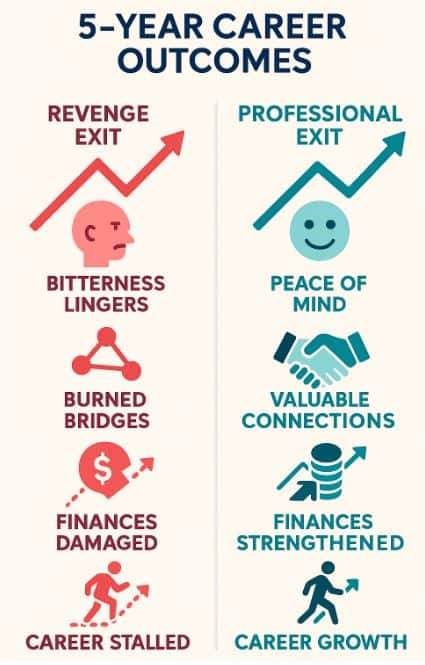 I’ve tracked career trajectories of people who left toxic workplaces both dramatically and professionally. The patterns are clear:
People who revenge quit often struggle with:
- Extended job searches due to reputation concerns
- Lower salary offers from risk-averse employers
- Reduced networking opportunities
- Ongoing legal or financial complications
People who exit professionally tend to experience:
- Faster transitions to better roles
- Positive references from respected colleagues
- Stronger professional networks
- Higher long-term earning potential
The most successful exits involve people who channel their frustration into building something better rather than tearing down what they’re leaving.
Making Your Own Decision: Is Revenge Quitting Worth It for Your Situation?
Only you can determine if revenge quitting is worth it for your specific circumstances, but ask yourself these questions honestly:
What do I actually want to accomplish? If it’s just emotional release, cheaper and less risky options exist. If it’s meaningful change, consider whether revenge quitting will actually create that change.
Can I afford the potential consequences? Consider not just immediate financial impact, but long-term career effects, legal risks, and relationship damage.
Will this align with who I want to be professionally? Your reputation follows you throughout your career. Make sure your actions reflect the professional identity you want to build.
Are there people I care about who might be hurt by my actions? Consider impacts on colleagues, clients, and other stakeholders who didn’t create the toxic situation.
What would I tell a friend in the same situation? Sometimes external perspective clarifies what’s strategic versus what’s emotionally satisfying.
The Bottom Line on “Is Revenge Quitting Worth It”
After investigating dozens of revenge quitting situations and their long-term outcomes, my honest assessment is this: revenge quitting is rarely worth it from a strategic standpoint, even when it feels emotionally justified in the moment.
The satisfaction is real but temporary. The consequences are often severe and lasting. The positive changes you hope to create rarely materialize.
But that doesn’t mean you should tolerate toxic workplaces or leave quietly without any consequences for bad behavior. It means being strategic about how you use your power and protect your interests.
The most effective “revenge” is usually building a career and life you actually enjoy while maintaining your professional integrity. Success, positive relationships, and personal happiness are more satisfying long-term than any dramatic exit moment.
Your toxic workplace doesn’t deserve to have power over your future choices. Don’t let bad employers turn you into someone who makes decisions from anger instead of strategy.
The question “is revenge quitting worth it” ultimately depends on what you value most: temporary satisfaction or long-term success. For most people in most situations, professional exits serve their interests better than dramatic ones.
Your career is too important to sacrifice for a moment of revenge against people who don’t deserve that much influence over your future.