Habit Change Strategies That Actually Work (Evidence-Based Guide)
Habit Change Strategies That Actually Work (Evidence-Based Guide)
Something’s been bothering me about all the advice on breaking bad habits. Most of it focuses on willpower and motivation – two things that research shows have almost nothing to do with lasting change.
I’ve spent months investigating this because I kept watching people I care about struggle with the same patterns over and over. They’d try the standard advice, fail, then blame themselves for being “weak” or “undisciplined.” But what if the approach was wrong, not the person?
After digging into the actual research on habit formation and behavioral change, I discovered something fascinating. The most effective habit change strategies work with your brain’s natural learning patterns, not against them.
Why Most Habit Change Approaches Fail
Here’s what nobody talks about: your brain doesn’t distinguish between “good” and “bad” habits at the neurological level. It just automates behaviors that get repeated frequently in consistent contexts.
Habits exist because they’re efficient solutions to recurring problems. That phone checking? It solves boredom and provides social connection. The stress eating? It regulates emotions when you’re overwhelmed. The procrastination? It avoids uncomfortable feelings associated with difficult tasks.
Research from MIT shows that habits are stored in the basal ganglia – a brain region that operates largely below conscious awareness. This explains why willpower-based approaches fail. You’re trying to use conscious control to override unconscious programming.
Dr. Ann Graybiel’s research on habit formation reveals something crucial: habits persist because they follow predictable trigger-routine-reward cycles that become deeply ingrained through repetition. Simply deciding to stop rarely interrupts these automated neural pathways.
The most common mistake is treating habit change like a motivation problem when it’s actually a systems problem. People focus on getting “disciplined enough” instead of designing environments and strategies that make change inevitable.
Evidence-Based Habit Change Strategies
Let me walk you through the strategies that research shows actually work for long-term behavioral change:
Strategy 1: Identify Your Habit’s Hidden Function
Every persistent habit serves a psychological function, even when it’s causing problems. Until you understand what need your habit meets, you’re fighting a battle you can’t win.
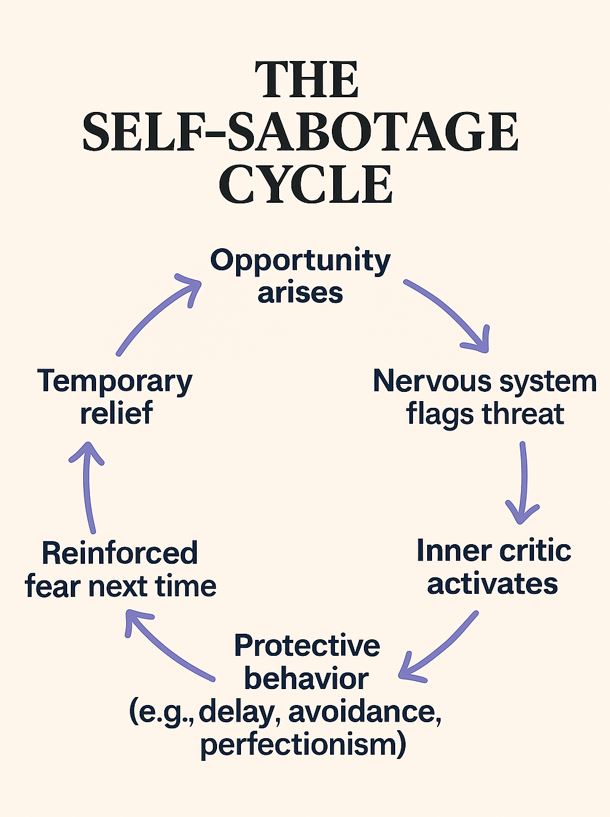 Research by Dr. Charles Duhigg shows that successful habit change starts with identifying the real reward your brain seeks. This isn’t always obvious. That evening wine might not be about relaxation – it could be about transitioning from “work mode” to “personal time.”
Track your habit triggers for one week:
– Note the time, location, and emotional state when the habit occurs
– Write down what happens immediately before the urge hits
– Record how you feel 15 minutes after completing the habit
– Look for patterns in your emotional needs
I keep seeing people try to change behaviors without understanding their function. It’s like trying to fix a machine without knowing what it’s supposed to do. Once you identify the underlying need, you can find healthier ways to meet it.
Strategy 2: Environmental Design for Behavioral Change
Stanford researcher BJ Fogg’s work on behavior change demonstrates that environment shapes behavior more powerfully than motivation or willpower. Your surroundings literally program your automatic responses.
The most successful habit changes involve modifying environmental cues rather than relying on self-control. This works because habits are largely contextual – they get triggered by specific environmental signals.
Environmental modifications that work:
– Remove visual cues that trigger unwanted behaviors
– Increase friction for habits you want to eliminate
– Reduce friction for habits you want to develop
– Change your physical routes and routines to avoid trigger contexts
Someone mentioned this to me recently: they couldn’t stop checking social media until they moved the apps off their home screen. That tiny change in friction was enough to break the automatic response pattern.
Research from Duke University shows that 45% of daily behaviors happen in the same contexts. When you change the context, you interrupt the automatic habit loop and create space for conscious choice.
Strategy 3: Implementation Intentions and If-Then Planning
Psychologist Peter Gollwitzer’s research on implementation intentions reveals why vague goals fail and specific plans succeed. Your brain needs precise behavioral blueprints to create new automatic responses.
Instead of “I’ll eat healthier,” create specific if-then plans: “If I feel stressed after work, then I’ll drink a glass of water and take five deep breaths before deciding what to eat.”
Effective implementation intentions include:
– Specific trigger situations (when, where, what circumstances)
– Exact behavioral responses (precisely what you’ll do instead)
– Clear connection between trigger and alternative action
– Plans for common obstacles and setbacks
This works because it pre-decides behavioral responses, reducing the cognitive load required for change. When you encounter your trigger, the alternative behavior is already programmed.
Studies show implementation intentions increase goal achievement rates by 200-300% compared to general goal-setting. The specificity creates new neural pathways that compete with old habit patterns.
Strategy 4: Habit Substitution Rather Than Elimination
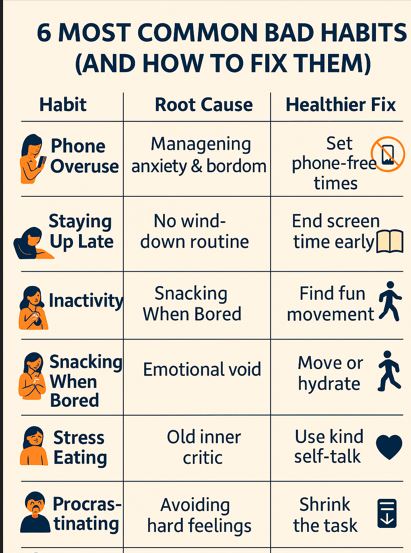 Neuroscience research reveals why “just stop” approaches fail: they create behavioral voids that old habits rush back to fill. Successful habit change involves replacing old patterns with new ones that meet the same underlying needs.
Dr. Judson Brewer’s research on habit formation shows that trying to eliminate behaviors without substitution creates psychological tension. The old neural pathways remain intact and ready to reactivate under stress.
Effective habit substitution process:
– Identify the emotional or physical need your current habit meets
– Design a healthier behavior that provides similar satisfaction
– Practice the substitute behavior in the same contexts as the old habit
– Focus on consistency over perfection during the transition period
For example, if you bite your nails when anxious, the substitute isn’t just “don’t bite nails” – it’s a specific anxiety management technique like pressing your fingertips together or doing a breathing exercise.
This connects to the broader framework I researched in my complete guide to breaking unhealthy habits, where I explore how different types of behavioral patterns require different substitution strategies.
Strategy 5: Progressive Habit Disruption
Research from the University of Southern California shows that major habit changes are more sustainable when implemented gradually through what researchers call “habit stacking” or progressive disruption.
Rather than attempting complete behavioral overhauls, successful change happens through strategic modifications to existing routines. This works because it builds on established neural pathways instead of trying to create entirely new ones.
Progressive disruption technique:
– Start by changing one small element of your habit routine
– Once that modification feels natural, add another small change
– Gradually reshape the entire behavioral sequence over weeks or months
– Focus on consistency in the new elements before adding complexity
I’ve noticed this approach works especially well for complex habits like morning routines or evening wind-down patterns. People who try to change everything at once usually revert to old patterns within days.
Strategy 6: Social Accountability and Environmental Support
Research by Dr. Christine Carter shows that behavioral changes are 65% more likely to succeed when you commit to someone else. Social accountability creates external motivation when internal willpower falters.
But effective social support goes beyond just telling people your goals. It involves creating systems that make your intended changes visible and receiving regular feedback on your progress.
Evidence-based social support strategies:
– Daily check-ins with an accountability partner
– Sharing progress data, not just intentions
– Finding others working on similar behavioral changes
– Creating consequences (not punishments) for consistency lapses
The key insight from social psychology research: we’re more motivated to maintain consistency with our public commitments than our private ones. When you make your habit change social, you engage additional psychological motivators beyond personal willpower.
Strategy 7: Self-Compassion for Setbacks
Dr. Kristin Neff’s research on self-compassion reveals something counterintuitive: being kind to yourself after setbacks actually increases long-term success rates compared to self-criticism.
Most people think harsh self-talk motivates better performance. But studies show the opposite. Self-criticism triggers stress responses that make your brain seek comfort through familiar behaviors – often the exact habits you’re trying to change.
Self-compassion practices that support habit change:
– Treat setbacks as information rather than failures
– Respond to slips with curiosity instead of judgment
– Recognize that struggle is normal during behavioral change
– Resume your intended behavior immediately rather than waiting for “perfect” timing
What I’ve come to understand through researching this is that sustainable change requires treating yourself like you would treat a good friend who’s learning something difficult. The harsh inner critic that most people think helps actually sabotages long-term success.
Evidence-Based Habit Change Timeline
 Research provides clear insights into how long behavioral changes actually take. Dr. Philippa Lally’s study at University College London found that simple habit formation averages 66 days, with complex habits taking up to 254 days to become automatic.
Days 1-21: High cognitive effort required. New behaviors feel unnatural and require conscious attention. Expect frequent lapses back to old patterns. This is normal neuroplasticity in action.
Days 22-66: Competing automatic responses. Sometimes the new behavior feels natural, sometimes the old pattern takes over. Consistency during this phase determines long-term success.
Days 67-90: New patterns feel increasingly automatic. Old triggers may still activate previous responses, but recovery happens faster and with less conscious effort.
Beyond 90 days: New behaviors operate with minimal conscious attention. Old habits may resurface under extreme stress, but the new patterns have become neurologically established.
This timeline varies significantly based on habit complexity, environmental support, and individual differences. The key insight is that expecting change to feel natural immediately sets you up for disappointment.
Creating Your Personal Habit Change System
Based on everything I’ve researched about behavioral change, here’s how to design a system that actually works:
Week 1: Assessment and Planning
– Complete detailed habit tracking to identify triggers and functions
– Design specific implementation intentions for your target behavior
– Modify your environment to support the changes you want
– Establish daily accountability check-ins
Weeks 2-4: Implementation and Adjustment
– Focus on consistency over perfection
– Track your substitute behaviors, not just the habits you’re avoiding
– Adjust your environmental modifications based on what you learn
– Practice self-compassion when setbacks occur
Weeks 5-12: Consolidation and Integration
– Gradually reduce the conscious effort required for new behaviors
– Expand successful strategies to other areas of behavioral change
– Build resilience for handling stress without reverting to old patterns
– Create long-term maintenance strategies for sustained success
The method I explored in my research on daily reset techniques works particularly well during the consolidation phase, helping maintain momentum when motivation fluctuates.
Habit Change Tracker Template
Here’s a simple tracking system based on behavioral research:
Daily Habit Change Log:
**Date:** ___________
**Target Behavior:** ________________________
**Trigger Situation:** ________________________
*What happened right before the urge?*
**Emotional State:** ________________________
*How were you feeling in the moment?*
**Response Chosen:** ________________________
*What did you actually do?*
**Result/Feeling:** ________________________
*How did you feel 15 minutes later?*
**Environmental Notes:** ________________________
*What in your surroundings supported or hindered your intended choice?*
**Tomorrow’s Adjustment:** ________________________
*One small change to make success more likely*
Track for minimum 3 weeks to identify patterns. Focus on learning rather than judgment.
What Real Success Looks Like
Something I keep noticing in the research: sustainable habit change doesn’t look like perfect execution. It looks like faster recovery from setbacks and decreased emotional intensity around behavioral choices.
Success indicators backed by research:
– Reduced cognitive effort required for new behaviors
– Shorter duration of setbacks when they occur
– Increased awareness of emotional triggers before they activate habits
– Greater flexibility in choosing responses to challenging situations
Real progress means shifting from “someone trying to change” to “someone who has changed.” This identity shift, according to research by Dr. James Prochaska, is often the final stage of successful behavioral modification.
The most powerful realization from studying habit change research: you’re not fighting against your brain’s natural learning mechanisms – you’re redirecting them toward patterns that serve you better.
Which of these evidence-based strategies resonates most with your current situation? What habit change challenge have you been struggling with that might benefit from a more systematic approach?
Check this out unhealthy coping mechanisms
stop bad habits
unhealthy habits breaking free
unhealthy habits examples