Hidden Toxic Traits: What They Really Are (That Most People Don’t Recognize)
Hidden Toxic Traits: What They Really Are (That Most People Don’t Recognize)
Here’s something that bothers me about how we talk about toxic traits. Most people can spot them easily in others – the friend who’s always critical, the partner who shuts down emotionally, the colleague who needs to control everything.
But when it comes to recognizing these same patterns in ourselves? We’re practically blind.
The toxic traits that damage our relationships most aren’t the obvious ones. They’re the subtle patterns we’ve normalized, the behaviors we’ve convinced ourselves are just “personality quirks.”
Key Insight:
The most destructive toxic traits are the ones we can’t see in ourselves. They operate in our blind spots, hidden behind justifications that make them feel normal or even virtuous.
This connects to the broader framework I researched in my complete guide to breaking unhealthy habits, but today we’re focusing specifically on the psychological patterns that hurt relationships while flying under our own radar.
What Toxic Traits Actually Are (Not What You Think)
When most people hear “toxic traits,” they picture dramatic behaviors. Screaming matches. Manipulation. Obvious cruelty. But that’s not how these patterns usually show up in real life.
Let me share what completely shifted how I understand these behaviors. Your toxic traits aren’t character flaws that make you a bad person. They’re learned responses – defense mechanisms that once helped you survive but now hurt your connections with others.
Think about it this way. A five-year-old who learned that being perfect kept angry parents calm becomes the adult who can’t relax standards. The teenager who discovered that controlling everything felt safer becomes the micromanager nobody wants around.
These patterns made sense when they started. But what protects you at fifteen often sabotages relationships at thirty-five.
The Sneaky Nature of Hidden Toxic Traits
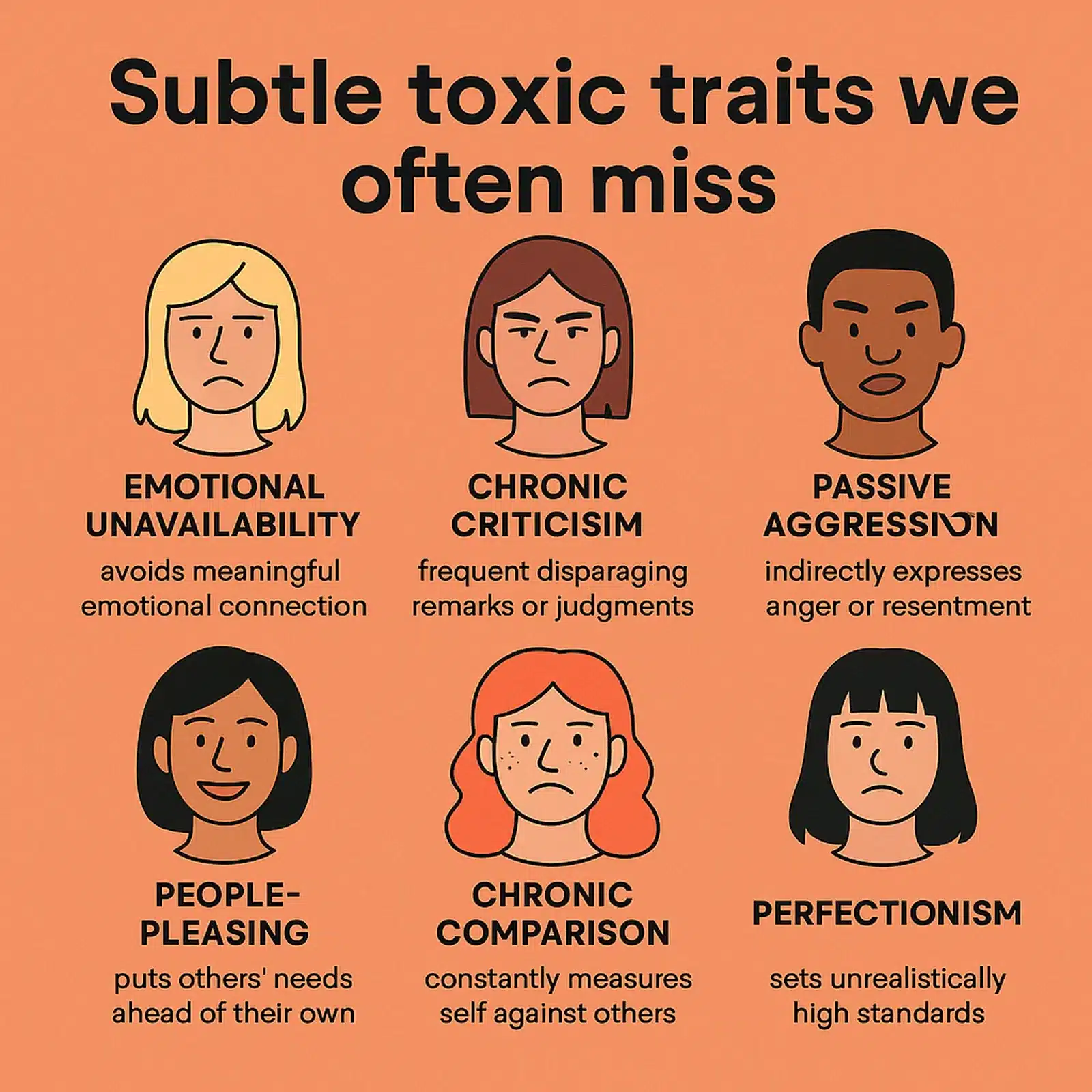 What shocked me most in my research was how these patterns disguise themselves. They don’t announce themselves with warning signs. Instead, they masquerade as positive qualities:
- Perfectionism presents as “having high standards”
- People-pleasing disguises itself as “being considerate”
- Emotional unavailability looks like “being strong and independent”
- Chronic criticism feels like “being helpful and honest”
- Control issues seem like “being responsible and organized”
The cruel irony? These traits often create the exact problems they’re trying to avoid. When you try controlling everything to feel safe, you often create more chaos. When you people-please to avoid conflict, you build resentment that explodes later.
The Hidden Emotional Logic Behind Common Toxic Traits
After talking to people about their relationship struggles, I started noticing patterns. Every toxic trait has emotional logic behind it – a legitimate need it’s trying to meet in a harmful way.
Emotional Unavailability: The Invisible Wall
This one’s particularly hard to spot from the inside. You’re physically present but emotionally miles away. You nod, say the right things, but keep an invisible barrier up.
Picture someone sharing something vulnerable with you. They’re opening their heart, but you’re already planning your response or thinking about dinner. You’re somewhere else entirely.
Behind that wall, you’re often starving for connection while simultaneously terrified of it. The exhaustion of keeping people at arm’s length while desperately wanting closeness.
Chronic Criticism: The Flaw-Finding Scanner
You know someone who walks into a beautiful room and immediately spots the one imperfection. They receive great feedback but focus entirely on the tiny suggestion for improvement.
This isn’t about having standards – it’s about making peace impossible. Living this way means never being satisfied, always scanning for problems while missing moments of joy.
When I was investigating this pattern, I realized how much life gets missed while focused on flaws. The friend who deflects every compliment with “but I messed up the third slide” is operating from this trait.
Passive Aggression: The Sideways Express
This trait expresses anger indirectly instead of addressing issues head-on. Sarcastic comments, subtle digs, the silent treatment, or saying “I’m fine” in a tone that clearly means everything is wrong.
People who do this aren’t being cruel on purpose. They often learned early that direct conflict felt dangerous, so they developed sideways methods of expressing feelings.
The problem? Issues never get resolved when they’re addressed sideways. The underlying problems fester while the relationship deteriorates.
People-Pleasing: The Exhausting Performance
This disguises itself beautifully as kindness, making it extra tricky to recognize. It’s constantly putting others’ needs before your own, chronic “yes” when you mean “no,” never expressing disagreement.
People-pleasers believe they’re being selfless and loving. Actually, they’re trying to control outcomes by ensuring everyone likes them as protection against abandonment.
The cost? Chronic stress from overriding your own needs. Having no idea what you actually want. Relationships lacking real closeness because you never show up as yourself.
Boundary Bulldozing: The Limit Ignorer
These are people allergic to the word “no.” They treat your limits like opening negotiations. “But I thought we were close” or “if you really cared, you would…”
They press for “just five minutes” when you say you can’t talk. Find sneaky ways to bring up topics you said were off-limits. Push until you give in from exhaustion.
The painful irony? This behavior pushes away the very connection it’s trying to secure. People don’t move closer to those who ignore their boundaries – they create distance to protect themselves.
The Hidden Pain Behind These Patterns
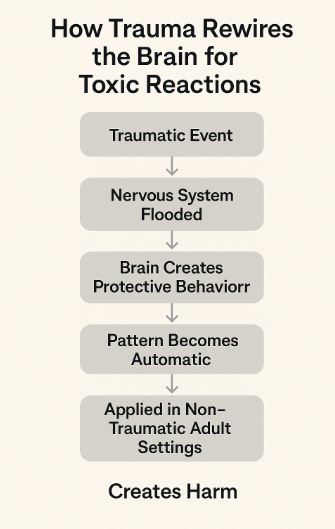 Every toxic trait has a story behind it. A wound. A moment when your developing brain decided this behavior was necessary for survival.
What I discovered through my research is that different childhood experiences tend to create different toxic traits. Understanding these connections shows why certain patterns feel so stuck.
Abandonment Wounds Create Anxious Patterns
When you experienced significant abandonment – whether physical (parent leaving) or emotional (caregiver present but unavailable) – you likely developed constant vigilance for rejection signs.
This creates traits like anxious attachment, people-pleasing to prevent abandonment, relationship sabotage (leaving before you can be left), and jealousy that monitors for signs someone is pulling away.
Marcus’s father left when he was eight. Thirty years later, he still interpreted any independence in relationships as the beginning of abandonment. His partner wanting a night out with friends felt like she was already halfway out the door.
His controlling behavior wasn’t about domination – it was frantic attempts to manage unbearable abandonment terror.
Boundary Violations Create Confusion About Limits
When your boundaries weren’t respected as a child – through physical intrusion, emotional overwhelm, or not being allowed privacy – you developed confusion around appropriate limits.
This creates boundary bulldozing (not recognizing others’ right to say no), extremely rigid boundaries (building walls for protection), chronic compliance (not believing you have the right to limits), or passive aggression (expressing anger sideways because direct boundary-setting feels unsafe).
I kept hearing about childhood homes where privacy was seen as secrecy, and secrecy was forbidden. No wonder appropriate separation in adult relationships felt impossible.
Emotional Invalidation Creates Feeling Problems
When feelings were consistently dismissed, punished, or ignored as a child, confusion around emotional expression develops.
This creates emotional unavailability (suppressing feelings until they’re no longer accessible), emotional volatility (feelings emerging as overwhelming floods), chronic overthinking (using intellect to avoid emotions), or empathy burnout (over-tuning to others while disconnecting from yourself).
Picture childhood homes where feelings were dangerous. “Don’t cry or you’ll get something to cry about.” “Get over it.” “You’re too sensitive.” These messages taught complete mistrust of internal emotional signals.
Worthiness Wounds Create Achievement Addiction
When your sense of being lovable was damaged through criticism, comparison, or conditional approval based on achievement, you developed a shaky sense of value.
This creates perfectionism (believing you must be flawless to be worthy), chronic achievement (trying to “earn” unconditional love), impostor syndrome (never believing accomplishments are legitimate), or approval addiction (constant seeking of external validation).
The landmark ACE (Adverse Childhood Experiences) study showed direct connections between childhood trauma and problematic behaviors later. But you don’t need major trauma to develop these patterns.
Sometimes it’s the quieter wounds. The parent physically present but emotionally absent. Subtle messages that you weren’t quite good enough. Small rejections that taught you it wasn’t safe to be yourself.
How Relationships Expose Our Hidden Traits
There’s no better mirror for toxic traits than close relationships. These intimate connections trigger our deepest insecurities and most ingrained patterns – not to punish us, but to show us what needs healing.
Picture this scenario. You’re cooking dinner with your partner. They suggest adding more garlic to the pasta sauce. Instead of considering the idea, you immediately defend your recipe, reference your culinary training, mention how your grandmother won awards for her sauce.
Over garlic. In your kitchen. With no judges present.
Your partner looks confused and hurt. “I wasn’t challenging you. I just like garlic.”
Suddenly you see the pattern that’s been running your life – turning casual suggestions into threats, peaceful moments into battlegrounds you have to win.
Why Close Relationships Trigger These Patterns
When we bond closely with someone, it activates the same attachment system formed in our earliest relationships. If we experienced inconsistent love as children, even minor disappointments in adult relationships can trigger old abandonment fears.
Your partner is twenty minutes late to meet you. On the surface, you’re mildly annoyed. Internally, you’re spiraling into the same worthlessness you felt with a chronically absent parent.
Your response – cold withdrawal and punishing silence – makes no sense for a twenty-minute delay. But makes perfect sense for the twenty-year-old wound it’s triggering.
Ever notice how your reactions sometimes seem wildly disproportionate to what’s actually happening? That’s often your attachment system getting activated by current situations that remind your nervous system of past wounds.
The Cruel Irony of Toxic Traits
What I found most disturbing about toxic traits is how they create their own feedback loops. These protective behaviors often generate the exact situations we’re trying to avoid.
When we act defensive, others get defensive too. When we try controlling everything, we often create more chaos. When we people-please to avoid conflict, we build anger that explodes later.
It’s like trying to put out fire with gasoline.
Jamie had perfected emotional self-sufficiency. Never needing anyone. Handling everything alone. Keeping relationships pleasant but surface-level. This worked until she fell deeply in love with someone who wanted genuine intimacy.
Suddenly her defenses felt like obstacles rather than protections. But dismantling them brought terror rather than relief. The feeling of wanting closeness desperately while simultaneously feeling like it might destroy you.
Why These Patterns Are So Hard to Change
Here’s the frustrating truth about toxic traits. There’s a big difference between knowing something intellectually and knowing it in your bones.
Your conscious mind can understand that a pattern is harmful, but your nervous system still believes it’s necessary for survival. When these traits developed, they were helpful responses to your environment. Your brain formed strong pathways around these behaviors.
Breaking these patterns isn’t just about deciding to change. It requires rewiring your nervous system, changing core beliefs, learning new emotional responses.
Think about it this way. Your new awareness might be a few months old, but this pattern has been practicing for decades. Give the new part time to grow stronger.
The Brain’s Resistance to Change
Your brain loves efficiency. Once it finds a solution that works – even if it causes problems – it wants to keep using that solution. Toxic traits become mental shortcuts that bypass conscious choice entirely.
When you feel stress, boredom, or loneliness, your brain immediately suggests the same solution it’s used before: criticism to feel superior, control to feel safe, people-pleasing to feel accepted.
This happens faster than conscious thought. By the time you realize what’s happening, you’re already deep in the pattern.
Tools That Actually Transform These Patterns
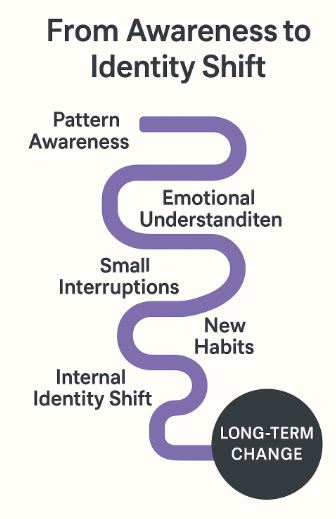 After researching different approaches to changing toxic traits, certain methods consistently prove effective while others consistently fail. Here’s what actually works:
Pattern Recognition Without Self-Attack
The first step isn’t trying to stop these behaviors – it’s learning to see them clearly without immediately judging yourself.
Keep a simple daily log. When did you notice toxic traits arising? What triggered them? How did they show up? What happened as a result?
Over time, patterns become undeniable. You can’t transform traits you’re not conscious of, and this practice builds awareness gradually rather than overwhelming yourself with criticism.
Understanding the Need Behind the Behavior
For each toxic trait, identify what legitimate need it was trying to meet. Perfectionism might be attempting to create safety through control. Emotional walls could be trying to prevent abandonment by avoiding intimacy.
Once you understand the underlying needs, you can brainstorm healthier ways to meet them. The key isn’t eliminating the need – it’s finding better strategies to address it.
Environment Design for Success
Your surroundings shape your choices more than willpower ever could. Instead of trying to resist triggers with pure determination, modify your environment to support healthier responses.
Environment Changes That Help:
- For perfectionism: Set specific time limits for tasks, display “good enough” examples as visual reminders
- For people-pleasing: Practice delayed responses – “Let me check my calendar and get back to you”
- For emotional unavailability: Schedule regular check-ins with yourself about feelings
- For criticism: Keep a daily list of things you appreciate about others
The Counter-Practice Method
For each toxic trait, develop a specific opposite action. When you notice critical thoughts arising, deliberately look for something to appreciate. When you feel the urge to control, practice letting go of outcomes.
These feel forced initially but gradually become more natural as you strengthen new brain pathways.
Body-Based Awareness
Since toxic traits often operate below conscious awareness, purely mental approaches have limits. Body-based practices help access and shift patterns at a deeper level.
Learn to recognize the physical sensations that precede toxic traits. Tightness in your chest before people-pleasing. Jaw clenching before criticism. Shallow breathing before emotional shutdown.
When you notice these physical signals, you can intervene before the pattern fully activates.
Graduated Vulnerability Practice
Many toxic traits develop as protection against vulnerability. Learning to be appropriately vulnerable in safe relationships is crucial for transformation.
Start small. Share a minor disappointment instead of pretending everything’s fine. Ask for help with something low-stakes. Express a preference instead of always deferring to others.
As these small acts of authenticity feel safer, you can gradually increase the level of genuine expression.
The Transformation Process: What to Expect
Healing from toxic traits isn’t linear, quick, or dramatic. But it’s absolutely worth every difficult step.
The Recognition Phase
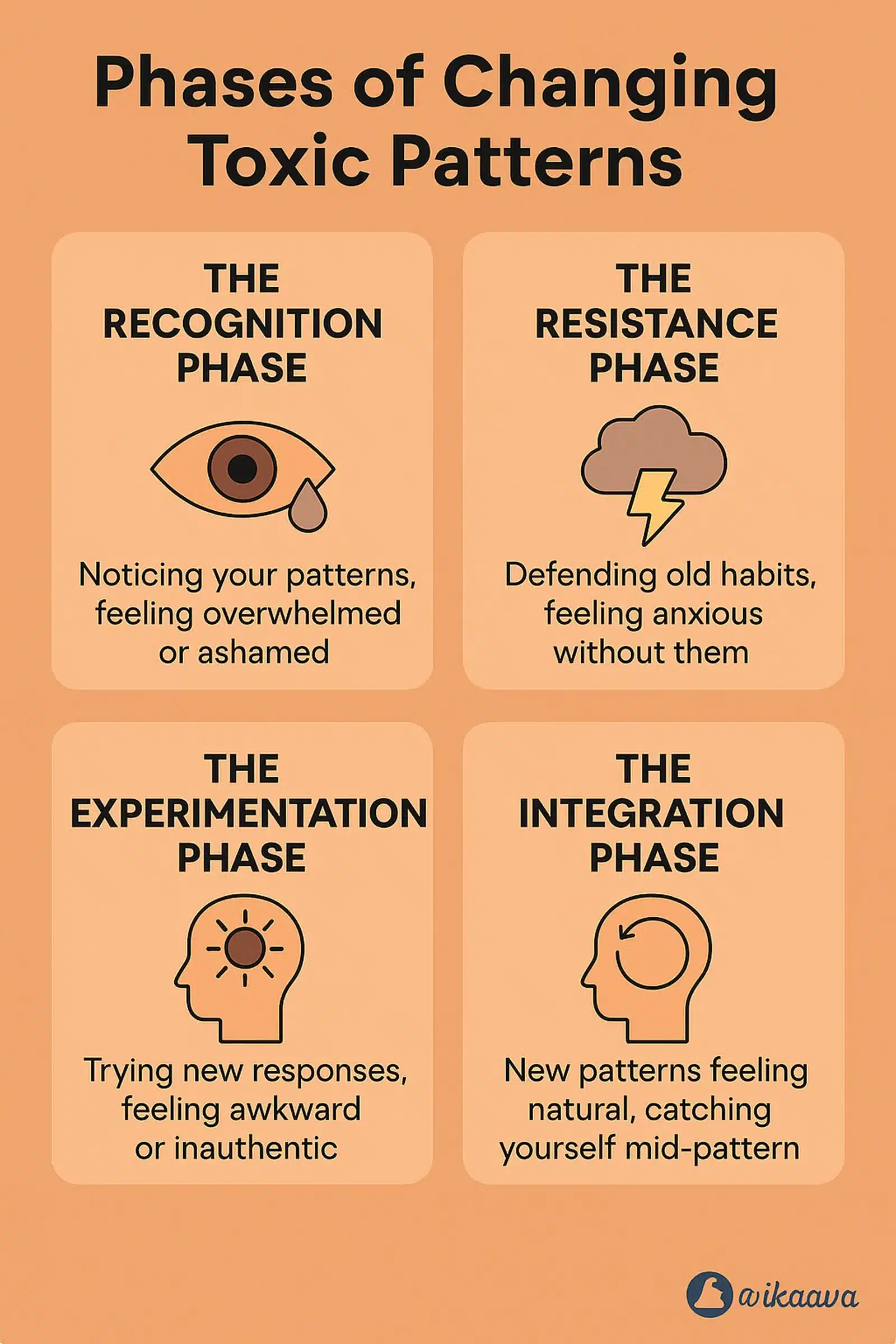 This is when you first start seeing your patterns clearly. It can feel overwhelming to suddenly notice traits that have been operating unconsciously for years. You might feel shame about damage you’ve caused, but this awareness is actually the first step toward freedom.
The Resistance Phase
Your psyche will fight changes to established patterns because they’ve been providing psychological benefits. You might find yourself defending old patterns or feeling anxious without familiar coping mechanisms.
This resistance isn’t weakness – it’s your nervous system protecting strategies it believes keep you safe.
The Experimentation Phase
You start trying new responses in situations that typically trigger toxic traits. These attempts often feel awkward and inauthentic at first. You’re literally rewiring brain pathways that have been reinforced for years.
The Integration Phase
New patterns gradually become more natural, though toxic traits may still surface during stress. You develop the capacity to catch yourself mid-pattern and course-correct. The old behaviors lose their automatic quality.
Creating Support for Long-Term Change
This work is too difficult to do alone. Having people who can compassionately reflect your patterns back to you is invaluable.
Create “pattern pacts” where you explicitly give trusted friends permission to gently name when they spot you falling into destructive traits. “I notice you’re doing the thing where you take on everyone else’s emotions” or “I think you’re in your perfectionism spiral right now.”
These external mirrors help us see what we’re too close to notice. It’s like trying to see your own eyes without a mirror – sometimes impossible without outside perspective.
What to Say to Yourself During This Process
If you’re recognizing destructive patterns in yourself, there are things that need to be said – things I needed to hear when I was researching this topic.
You’re not failing because it’s hard. The difficulty isn’t evidence of something wrong with you. It’s evidence of how deeply ingrained these patterns become. Your brain has literally rewired itself around these traits through thousands of repetitions.
The struggle doesn’t mean you’re weak. It means you’re fighting against sophisticated neural architecture that takes time to reshape.
You don’t need to transform everything at once. Start with just one pattern – ideally the one causing the most immediate suffering. Small changes ripple outward in ways you can’t yet see.
Your toxic traits have been serving a purpose, meeting needs, solving problems – however imperfectly. Honor what these patterns have done for you before trying to release them.
Thank the control issues for trying to create safety in uncertainty. Acknowledge how criticism protected you from disappointment. Recognize how people-pleasing kept you connected when authentic expression felt dangerous.
From Hidden Patterns to Authentic Connection
What looks like falling apart might actually be falling together – pieces of yourself returning that had been fragmented by defensive patterns. What feels like weakness might be strength finally asserting itself against traits that have drained your life force.
The journey from toxic traits to authentic strength isn’t about becoming perfect. It’s about becoming more fully yourself – learning to meet your needs directly rather than through patterns that ultimately create the very problems they’re trying to solve.
Every time you choose authenticity over a toxic trait, you’re rewiring brain pathways. Every moment you respond to pain with self-compassion instead of self-protection, you’re building new capacity.
These seemingly small choices accumulate into transformation that, while rarely dramatic in any single moment, is revolutionary when viewed across time.
The path forward isn’t about becoming someone different. It’s about returning to yourself – the self that exists beneath these adaptive patterns. The self that knows what nourishes rather than depletes you.
That self is still there, still whole, still possible. And it’s closer than you think.
FAQ: What People Ask Most About Hidden Toxic Traits
Q: Why do toxic traits feel so automatic?
A: Toxic traits become automatic because they’re practiced brain pathways. Your brain creates shortcuts for behaviors it thinks you need. After years of repetition, these patterns bypass conscious choice entirely and activate faster than you can think about them.
Q: Can someone have toxic traits and still be a good person?
A: Absolutely. Toxic traits are learned behaviors, not character judgments. Good people can have harmful patterns they’re unaware of. The willingness to recognize and work on these traits actually shows strength and integrity, not weakness.
Q: How do I know if my behavior is toxic or just part of my personality?
A: Toxic traits typically cause recurring problems in relationships or persistent distress. They feel rigid and automatic rather than chosen. Healthy personality traits enhance your life and connections, while toxic traits create ongoing friction and suffering.
Q: Do all toxic traits come from childhood trauma?
A: Not necessarily. While many toxic traits have roots in early experiences, they can also develop from later traumas, cultural conditioning, or even positive experiences that become imbalanced. However, childhood is particularly influential for behavioral pattern development.
Q: How long does it take to change these patterns?
A: The timeline varies depending on the trait and your support system. Most people see noticeable progress within 3-6 months of consistent work, with significant transformation typically occurring over 1-3 years. Remember that healing isn’t linear – setbacks are normal.
Understanding your hidden toxic traits is just the beginning of transformation. The willingness to look honestly at patterns that have been operating in your blind spots is already an act of courage.
Remember, these traits developed as protection. They’re not evidence of your badness but of your brain’s attempt to keep you safe in difficult circumstances. With patience, support, and the right tools, they can be transformed into authentic strengths that enhance rather than damage your relationships.
For additional evidence-based strategies on changing behavioral patterns, explore this comprehensive guide.
For more insights, see bad habits really.