The Hidden Danger of People-Pleasing: The Real Cost
The Hidden Danger of People-Pleasing: The Real Cost
People do the strangest thing when they’re afraid of disappointing others, they disappoint themselves instead.
In a confused fit of discomfort, you say “sure, no problem” to hosting Thanksgiving dinner for 23 people, in a studio apartment, with a microwave and a mini-fridge. Ok I’m exaggerating but you get what I mean.
The worst part? At that exact moment, it felt totally ok to say “totally fine.”
Here’s what’s actually happening when people-pleasing takes over your life. You’re not being nice, you’re slowly erasing yourself one “whatever you want” at a time. Yes you are eroding your own very importance.
What People-Pleasing Really Looks Like
 People-pleasing isn’t just about being polite or considerate, it’s about abandoning your own needs to avoid any chance of conflict or disappointment.
You know you’re deep in people-pleasing territory when you apologize for things that aren’t your fault. Someone bumps into you, and you say sorry. The restaurant messes up your order, and you eat it anyway.
It’s like being a human doormat, except doormats don’t feel guilty about taking up space.
The sneaky thing about people-pleasing is how reasonable it sounds. “I just want everyone to be happy.” “It’s easier if I just go along with it.” You convince yourself.
While you’re busy making sure everyone else is comfortable, you’re becoming increasingly uncomfortable in your own life.
All because saying what you actually want feels impossible.
Psychologists note that chronic people-pleasing often stems from a fear of rejection and a lack of healthy boundaries. Read this Psychology Today article on the emotional toll of people-pleasing.
The Hidden Cost of Constant People-Pleasing
 People-pleasing costs way more than you think it does.
First, there’s the obvious stuff. Your time, your money, your energy.
Your calendar fills up with obligations that feel more like punishments. Your bank account empties from buying things you don’t want for people who didn’t ask.
But the real cost of people-pleasing runs much deeper than that.
You start losing touch with what you actually want. When someone asks your opinion, you automatically scan their face for clues about what they want to hear.
Your preferences become a mystery, even to yourself.
It’s like being a chameleon, except chameleons know they’re changing colors. You just wake up one day and realize you have no idea who you actually are. You have drifted so far from who you truly are, that you don’t recognise the reflection in the mirror.
Why People-Pleasing Backfires Spectacularly
Here’s what’s wild about people-pleasing. The very thing you’re trying to avoid usually ends up happening anyway.
You people-please to avoid conflict. But constantly saying yes when you mean no creates resentment. That resentment builds up like pressure in a soda bottle. Eventually, it explodes over something completely unrelated.
You snap at your partner for leaving dishes in the sink. Not because of the dishes, because you’ve been swallowing your feelings for months about everything else.
Plus, people-pleasing often backfires because it attracts the wrong kind of attention. The people who appreciate your endless giving are often the ones who never give back.
You become a magnet for takers. They sense your inability to say no from a mile away.
The Relationship Damage from People-Pleasing
This sounds crazy when I say it out loud, but people-pleasing actually hurts your relationships instead of helping them.
When you constantly people-please, you’re not showing up as yourself. You’re showing up as who you think the other person wants you to be.
Your friends think they know you, but they only know your people-pleasing persona. The real you stays hidden because you’re afraid the real you might not be acceptable.
That creates fake intimacy. People feel close to a version of you that doesn’t actually exist, and you feel lonely even when surrounded by people.
Plus, people-pleasing can make others uncomfortable too. When you never express preferences or opinions, you put pressure on them to make all the decisions.
How People-Pleasing Becomes a Prison
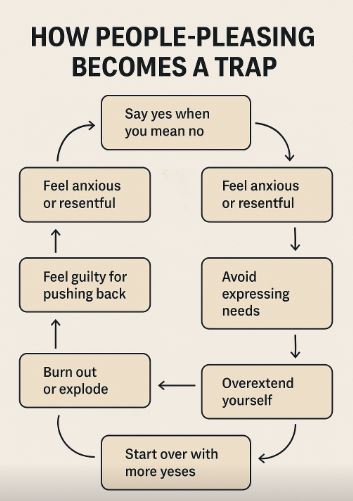 Ever notice how people-pleasing creates more problems than it solves?
You agree to help move your friend’s couch on the same day you planned to rest. Now you’re exhausted and resentful, but you can’t say anything because you volunteered.
You take on extra work projects because you want to be seen as a team player. Now you’re overwhelmed and falling behind on everything.
You host events you can’t afford because saying no feels impossible. Now you’re stressed about money but can’t explain why.
Each yes traps you a little more. You build a life that looks helpful from the outside but feels suffocating from the inside.
The Energy Drain Nobody Talks About
You’re constantly monitoring other people’s moods and reactions. Reading faces, interpreting tone, analyzing whether someone seems satisfied with your response.
It’s like having a full-time job as everyone else’s emotional thermometer. Except you don’t get paid, and you never get time off.
Then there’s the mental energy spent on planning how to please people. Thinking through what they might want, what they might need, what might make them happy. It’s utterly exhausting.
And the worst part? Most people aren’t even paying that much attention to whether you please them or not. You’re putting in all this effort for results that barely register.
Why Your Brain Gets Addicted to People-Pleasing
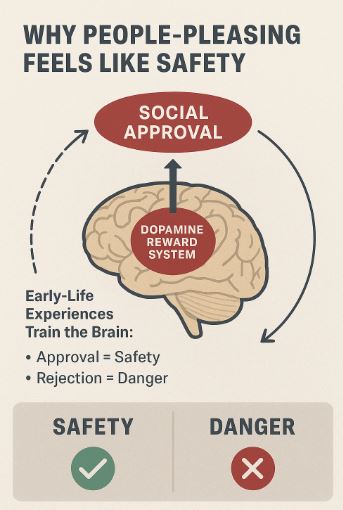 Here’s something nobody tells you about people-pleasing. It can become genuinely addictive.
When you please someone, your brain gets a little hit of satisfaction. They smile, they thank you, they seem happy. For a moment, you feel valuable and needed.
But like any addiction, you need more and more to get the same feeling. One favor becomes two. Two becomes ten.
Plus, people-pleasing often starts as a survival strategy. Maybe growing up, keeping everyone happy kept you safe. Your brain learned that your worth depended on other people’s approval.
Now your adult brain still thinks your survival depends on making everyone else comfortable. Even when the original threat is long gone.
The Permission You Don’t Need to Stop People-Pleasing
Actually, let me back up here. You don’t need permission to have preferences, opinions, or boundaries.
You don’t need to earn the right to say no. You don’t need to justify wanting things. You don’t need to apologize for taking up space.
This feels revolutionary when you’ve been people-pleasing for years, but it’s actually just basic human stuff.
You’re allowed to dislike things other people love. You’re allowed to have different priorities. You’re allowed to be unavailable sometimes.
You’re allowed to be a whole person with your own thoughts, feelings, and needs. Not just a supporting character in everyone else’s story.
Simple Steps to Break Free from People-Pleasing
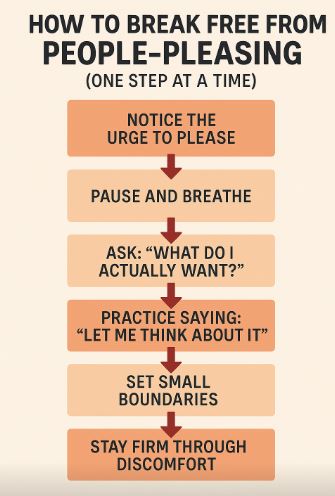 Here’s where things get practical. You can’t just flip a switch and stop people-pleasing overnight. But you can start making small changes that add up.
Start with low-stakes situations. When someone asks where you want to eat, actually express a preference. When someone asks what movie you want to watch, suggest something.
Practice the phrase “let me think about it.” This buys you time to check in with yourself.
Notice the physical sensation of wanting to people-please. Maybe your chest tightens, or your stomach flutters. Use that as a signal to pause and ask yourself what you actually want.
Set tiny boundaries and stick to them. Maybe you don’t answer work emails after 8 PM. Maybe you don’t lend money to people who haven’t paid you back.
Expect pushback when you start setting boundaries. People who benefited from your people-pleasing won’t love the change. That’s not your problem to solve.
What Happens When You Stop People-Pleasing
Here’s the good news. When you stop people-pleasing, you don’t become a selfish monster. You become a real person.
Some people might not like the change. The ones who only valued you for what you could do for them. Let them be uncomfortable.
But the people who actually care about you will respect your boundaries. They might even be relieved that you’re finally showing up authentically.
You’ll have more energy for things that actually matter to you. More time for relationships that feel balanced and genuine.
You’ll discover preferences you forgot you had. Maybe you actually love jazz music but haven’t listened to it in years because your friends prefer pop.
Most importantly, you’ll start building a life that actually fits you instead of one designed to keep everyone else happy.
Building Authentic Relationships After People-Pleasing
The scary thing about stopping people-pleasing is wondering if people will still like you. The amazing thing is finding out who actually does.
When you stop being everything to everyone, you become something real to the right people. Your relationships get deeper because they’re based on who you actually are.
You attract people who appreciate your authentic self instead of people who want to use your people-pleasing tendencies.
Conversations become more interesting because you’re contributing your actual thoughts instead of just agreeing with everyone.
Conflict becomes manageable because you’re not trying to avoid it at all costs. You can disagree with someone and still maintain the relationship.
Your Life After Breaking Free
 Here’s what nobody tells you about life after people-pleasing. It’s not perfect, but it’s yours.
You’ll still care about other people’s feelings, but you won’t sacrifice yourself to manage them. You’ll still be helpful, but you’ll choose when and how to help.
You’ll make decisions based on what makes sense for your life, not what makes everyone else comfortable.
You’ll disappoint some people. That’s not failure. That’s the price of being real.
You deserve relationships where you can show up as yourself. You deserve to have preferences that matter. You deserve to take up space without apologizing for it.
Your people-pleasing might have protected you once, but it’s not protecting you anymore. It’s just preventing you from living.
Start small. Start today. Start with one tiny moment where you choose yourself.
You’ve got this. One boundary at a time.
The Hidden Pain Behind Toxic Traits: Where They Come From (Part 2)