Unhealthy Habits Damaging Your Body and Mind (The Complete Health Impact Guide)
Unhealthy Habits Damaging Your Body and Mind (The Complete Health Impact Guide)
Research reveals something disturbing about the habits most people consider “normal.” They’re systematically damaging your body and mind in ways you don’t notice until the effects become severe.
After investigating the health impact of common behavioral patterns, I discovered these aren’t minor lifestyle issues. They’re serious health threats disguised as everyday activities. The damage accumulates silently over years, then emerges suddenly as chronic disease, mental health problems, and premature aging.
Recent studies show that adults engaging in just three unhealthy behaviors are 6.1 times more likely to have poor health than those with no unhealthy habits. What’s more concerning – research now indicates these impacts can begin as early as age 36, affecting both physical and mental wellbeing.
Critical Health Warning:
These “harmless” daily habits create compound damage to your body and mind. Like radiation exposure, the effects are invisible until they reach dangerous levels. Understanding the specific health impacts is your first defense.
This builds on the comprehensive framework I researched in my complete guide to breaking unhealthy habits, but focuses specifically on the medical and psychological damage these patterns inflict on your health systems.
The Hidden Health Crisis: How Habits Become Health Hazards
Most people focus on obvious health threats like smoking or excessive drinking. But the subtle habits damaging your body and mind cause more widespread harm because they operate below your awareness threshold.
Sitting at a desk for hours doesn’t feel dangerous like lighting a cigarette. But research shows extended sitting creates metabolic disruption almost as harmful as smoking. Your body interprets prolonged sitting as preparation for death, slowing circulation and shutting down fat-processing enzymes.
The Compound Damage Principle
Unhealthy habits work like compound interest running in reverse. Each repetition adds a small amount of damage that multiplies over time. The harm isn’t noticeable day-to-day, but accumulates exponentially over months and years.
Your brain’s efficiency systems make this worse. Once behaviors become automatic, you lose conscious awareness of their health impact. You’re no longer choosing these actions – they’re choosing you.
The Research on Health Impact
A landmark study from Medical News Today tracked individuals for decades, measuring how unhealthy habits affect health outcomes. The findings were stark: people engaging in smoking, heavy drinking, and physical inactivity showed measurable health decline by age 36.
Participants experienced increased depression, reduced psychological wellbeing, higher metabolic risk, and worse self-rated health. For those whose habits persisted long-term, the damage was significantly worse across all measures.
23 Unhealthy Habits Damaging Your Body and Mind
These patterns seem innocent but create serious physiological and psychological damage over time. Research reveals the specific mechanisms by which each habit harms your health systems:
Physical Health Destroyers
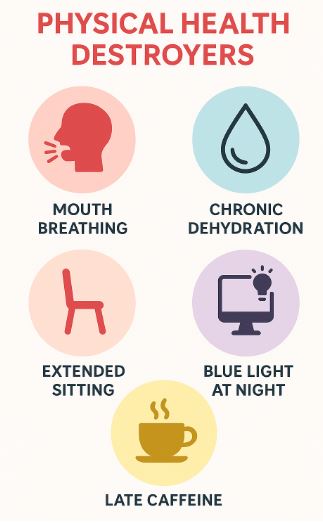 1. Mouth Breathing Throughout the Day
Body damage: Chronic mouth breathing reduces oxygen uptake efficiency, increases risk of dental problems, disrupts sleep quality, and keeps your nervous system in mild stress activation.
Mind impact: Poor oxygenation reduces cognitive performance and increases fatigue. Your brain, which uses 20% of your oxygen, operates at reduced capacity.
Health timeline: Effects begin within hours – reduced alertness and energy. Long-term consequences include sleep disorders and increased anxiety.
2. Chronic Dehydration
Body damage: Even mild dehydration (2% fluid loss) reduces physical performance, elevates heart rate, and impairs temperature regulation. Kidney function suffers, toxin elimination slows.
Mind impact: Dehydration reduces brain volume, impairs concentration, increases headaches, and triggers false hunger signals that lead to overeating.
Research finding: Studies show 75% of Americans are chronically dehydrated, contributing to fatigue, joint pain, and digestive issues.
Hydration Health Recovery:
- Immediate (1-2 hours): Improved alertness and mood
- Days 3-7: Better skin elasticity, reduced headaches
- Weeks 2-4: Improved kidney function, better digestion
3. Extended Sitting and Physical Inactivity
Body damage: Prolonged sitting shuts down fat-processing enzymes, reduces insulin sensitivity, weakens bones, and increases cardiovascular disease risk by 50%. Your metabolism literally slows to near-hibernation levels.
Mind impact: Sedentary behavior reduces BDNF (brain-derived neurotrophic factor), impairing memory formation and increasing depression risk.
Medical research: The American Heart Association found that sitting more than 8 hours daily increases death risk equivalent to smoking or obesity.
4. Blue Light Exposure Before Sleep
Body damage: Blue light suppresses melatonin production for up to 3 hours after exposure, disrupting circadian rhythms. This damages immune function, increases cancer risk, and accelerates aging.
Mind impact: Poor sleep reduces cognitive processing speed by 40%, impairs emotional regulation, and increases anxiety and depression risk.
Sleep study findings: Harvard Medical School research shows blue light exposure is more disruptive to sleep than caffeine consumed 6 hours before bedtime.
5. Caffeine After 2 PM
Body damage: Caffeine has a 6-hour half-life, meaning afternoon consumption disrupts sleep architecture even if you fall asleep normally. This creates chronic sleep debt and adrenal fatigue.
Mind impact: Disrupted deep sleep prevents memory consolidation and emotional processing, leading to irritability and reduced learning capacity.
Mental Function Destroyers
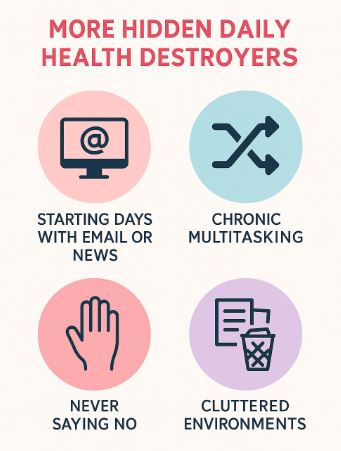 6. Starting Days with Email or News
Body damage: Immediate stress activation raises cortisol levels, suppresses immune function, and increases inflammation markers throughout the day.
Mind impact: Reactive morning routines hijack your attention, reduce creative thinking, and make you respond to others’ priorities instead of setting your own.
Neuroscience insight: The first hour after waking is when your brain is most neuroplastic. Using this time for reactive activities literally rewires your brain toward reactivity.
7. Chronic Multitasking
Body damage: Task-switching creates stress hormone spikes, increases heart rate variability, and elevates inflammation markers.
Mind impact: Multitasking reduces IQ by 10 points (equivalent to losing a night’s sleep), fragments attention, and reduces the quality of all work performed.
Stanford research: Heavy multitaskers show reduced density in the anterior cingulate cortex, the brain region responsible for attention and emotional control.
8. Never Saying No to Requests
Body damage: Chronic overcommitment creates sustained stress activation, weakens immune function, and increases risk of burnout syndrome – now recognized as an occupational disease by WHO.
Mind impact: Constant people-pleasing reduces sense of personal agency, increases resentment, and can lead to anxiety disorders and depression.
9. Working in Cluttered Environments
Body damage: Visual clutter increases cortisol levels by 21%, disrupts sleep quality, and can trigger stress eating behaviors.
Mind impact: Cluttered spaces reduce cognitive processing capacity, impair decision-making, and increase mental fatigue by forcing your brain to process unnecessary visual information continuously.
UCLA study: Women living in cluttered homes had higher cortisol levels throughout the day compared to those in organized spaces.
Emotional and Social Health Destroyers
10. Constant Social Media Comparison
Body damage: Social comparison activates stress responses, elevates inflammatory markers, and can trigger disordered eating behaviors.
Mind impact: Comparison hijacks reward systems, reduces life satisfaction, and can lead to body dysmorphic symptoms and depression.
Facebook study: Researchers found that people who reduced Facebook use for just one week showed measurable improvements in wellbeing and life satisfaction.
11. Avoiding Difficult Conversations
Body damage: Chronic avoidance creates persistent stress activation, elevates blood pressure, and weakens immune function through sustained fight-or-flight responses.
Mind impact: Unresolved conflicts create intrusive thoughts, reduce sleep quality, and impair concentration through cognitive load.
12. Perfectionism on Unimportant Tasks
Body damage: Perfectionist behaviors increase cortisol production, raise blood pressure, and are associated with higher rates of cardiovascular disease.
Mind impact: Perfectionism is linked to higher rates of anxiety, depression, and eating disorders. It reduces flexibility and resilience.
| Habit Category | Primary Body Impact | Primary Mind Impact | Recovery Timeline |
|---|---|---|---|
| Sleep disruptors | Immune suppression, hormone disruption | Memory impairment, mood instability | 1-2 weeks |
| Movement deprivation | Metabolic shutdown, muscle atrophy | Reduced BDNF, depression risk | 2-4 weeks |
| Attention fragmenters | Chronic stress activation | Attention deficits, anxiety | 3-6 weeks |
| Social/emotional avoiders | Inflammation, immune weakness | Isolation, depression | 1-3 months |
Additional Physical and Mental Destroyers
13. Eating While Distracted
Body damage: Mindless eating disrupts satiety signals, leads to overeating, and impairs digestion. Studies show people eat 25% more when distracted.
Mind impact: Removes mindful awareness from a basic life function, reducing present-moment awareness and life satisfaction.
14. Never Being Alone with Thoughts
Body damage: Constant stimulation prevents nervous system recovery, maintaining chronic low-level stress activation.
Mind impact: Prevents self-reflection, emotional processing, and creative thinking. Reduces ability to tolerate boredom, which is essential for innovation.
15. Shallow Breathing Patterns
Body damage: Chest breathing reduces oxygen efficiency, maintains stress responses, and impairs heart rate variability.
Mind impact: Poor breathing patterns are directly linked to anxiety, panic attacks, and reduced cognitive performance.
16-23. Additional Health-Damaging Patterns
- Poor posture: Creates spinal compression, reduces lung capacity, affects confidence and mood
- Skipping meals: Destabilizes blood sugar, increases stress hormones, impairs decision-making
- Chronic complaining: Rewires brain toward negativity, increases stress hormones, weakens immune function
- Rushing constantly: Elevates cortisol, increases accident risk, prevents presence and enjoyment
- Living for weekends: Creates chronic dissatisfaction, wastes majority of life, increases depression risk
- Information hoarding: Creates decision paralysis, prevents action-taking, increases anxiety
- Phone checking in bed: Disrupts sleep architecture, increases anxiety, reduces relationship intimacy
The Cascade Effect: How Habits Compound Health Damage
Individual unhealthy habits don’t exist in isolation. They create cascade effects that amplify overall health damage through interconnected body systems.
The Sleep-Stress-Weight Cascade
Poor sleep increases cortisol production, which promotes fat storage around organs. This weight gain reduces sleep quality, creating a self-reinforcing cycle. Each component makes the others worse.
Research shows this cascade can lead to metabolic syndrome within months, dramatically increasing diabetes and heart disease risk.
The Attention-Stress-Immune Cascade
Chronic multitasking fragments attention, requiring more mental energy to complete tasks. This creates stress, which suppresses immune function. Frequent illness further reduces cognitive capacity.
The Neurological Damage You Can’t Feel
Many unhealthy habits cause brain changes that occur below conscious awareness. By the time you notice symptoms, significant damage has already occurred.
Attention System Damage
Constant task-switching and device usage physically alters brain structure. The anterior cingulate cortex – responsible for attention control – shows reduced density in heavy multitaskers.
This damage makes it progressively harder to focus, creating a vicious cycle where you need more stimulation to achieve the same level of attention.
Reward System Hijacking
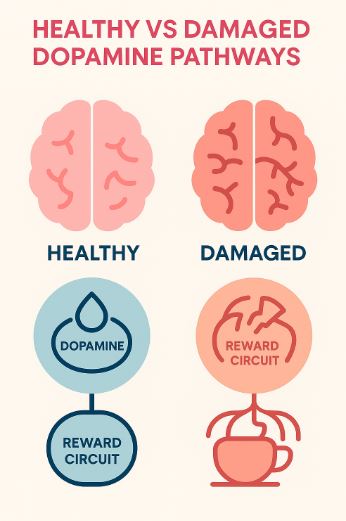 Habits involving instant gratification (social media, junk food, shopping) dysregulate dopamine systems. Your brain requires increasing stimulation to feel normal satisfaction.
This creates anhedonia – the inability to feel pleasure from healthy activities like exercise, nature, or meaningful conversation.
Physical Health Impacts by Body System
Understanding how habits damage specific body systems helps you recognize early warning signs before serious disease develops:
Cardiovascular System Damage
- Extended sitting: Reduces circulation, increases clotting risk
- Chronic stress habits: Elevates blood pressure, increases inflammation
- Poor sleep habits: Disrupts heart rate variability, increases arrhythmia risk
- Dehydration: Thickens blood, forces heart to work harder
Immune System Suppression
- Social isolation: Reduces immune cell activity by up to 40%
- Chronic stress: Suppresses white blood cell function
- Poor sleep: Reduces vaccine effectiveness, increases infection risk
- Processed food consumption: Creates inflammatory responses
Endocrine System Disruption
- Blue light exposure: Suppresses melatonin, disrupts growth hormone
- Irregular eating: Destabilizes insulin, affects thyroid function
- Chronic stress: Elevates cortisol, suppresses reproductive hormones
- Sedentary behavior: Reduces insulin sensitivity
Mental Health Impacts: The Hidden Psychological Damage
The mental health consequences of unhealthy habits often develop gradually, making them easy to miss until they become severe.
Cognitive Function Decline
Research from Stanford shows that people engaged in multiple unhealthy behaviors experience measurable cognitive decline including:
- Processing speed reduction: 15-25% slower information processing
- Working memory impairment: Difficulty holding information while thinking
- Executive function problems: Reduced planning and decision-making ability
- Attention span reduction: Average focus time drops from 12 minutes to 8 minutes
Emotional Regulation Damage
Unhealthy habits impair the brain’s ability to manage emotions effectively:
- Increased reactivity: Stronger emotional responses to minor triggers
- Reduced resilience: Slower recovery from stress or setbacks
- Mood instability: Greater day-to-day emotional fluctuations
- Anxiety amplification: Higher baseline anxiety levels
The Recovery Timeline: How Fast Can Health Improve?
Understanding recovery timelines helps maintain motivation during the challenging early stages of habit change:
Health Recovery Timeline:
Hours 1-24: Blood pressure and heart rate improvements from stress reduction
Days 2-7: Sleep quality improvements, mood stabilization, energy increases
Weeks 2-4: Immune function recovery, cognitive improvements, weight regulation
Months 2-6: Structural brain changes, metabolic normalization, chronic disease risk reduction
1+ Years: Maximum health benefits, disease reversal where possible
Individual System Recovery Rates
- Cardiovascular: Improvements begin within hours, major changes in 2-4 weeks
- Immune function: Recovery starts in 3-7 days, optimization in 4-8 weeks
- Cognitive function: Attention improvements in 1-2 weeks, complex cognition in 1-3 months
- Hormonal balance: Initial changes in days, full regulation takes 3-6 months
Breaking Free: Health-Based Habit Change
Understanding the specific health damage creates powerful motivation for change. When you know exactly how habits harm your body and mind, willpower becomes less necessary.
The Health-First Approach
Instead of focusing on behavior change alone, focus on health recovery. Ask yourself: “What would it feel like to have optimal energy, clear thinking, and emotional stability?”
This connects to my research on the Daily Reset Method, which provides systematic approaches for replacing health-damaging patterns with health-promoting ones.
Priority-Based Recovery
Not all habits cause equal damage. Focus first on habits that:
- Affect multiple systems: Sleep and movement habits impact everything else
- Create cascade effects: Stress habits amplify all other health problems
- Have immediate impact: Changes you can feel within days maintain motivation
- Enable other changes: Better sleep makes every other change easier
FAQ: Health Impacts of Unhealthy Habits
Q: How do unhealthy habits damage your body and mind?
A: Unhealthy habits damage your body through chronic inflammation, metabolic disruption, and system overload. They harm your mind by fragmenting attention, depleting neurotransmitters, and creating stress cycles that impair cognitive function and emotional regulation.
Q: What are the physical health impacts of bad habits?
A: Physical impacts include increased risk of heart disease, diabetes, obesity, poor sleep quality, reduced immune function, chronic fatigue, digestive issues, and accelerated aging. Research shows these effects can begin as early as age 36.
Q: How do unhealthy habits affect mental health?
A: Mental health impacts include increased depression and anxiety, reduced cognitive function, attention problems, memory issues, decreased creativity, emotional volatility, and reduced stress resilience. These effects compound over time.
Q: Can the health damage from bad habits be reversed?
A: Many health impacts can be reversed through habit change, though the timeline varies. Cardiovascular improvements can begin within weeks, mental clarity often returns within days of better sleep, but some damage may be permanent if habits persist too long.
Q: Which unhealthy habits cause the most health damage?
A: Sleep disruptors, chronic stress patterns, and sedentary behaviors cause the most widespread damage because they affect multiple body systems simultaneously. These habits also make it harder to maintain healthy behaviors in other areas.
Your Health Recovery Action Plan
Understanding how habits damage your body and mind is the first step. The next is strategic intervention based on health impact rather than random behavior change.
Immediate Actions (This Week)
- Sleep protection: Remove devices from bedroom, establish consistent bedtime
- Movement integration: Stand every 30 minutes, walk after meals
- Stress interruption: Practice 4-7-8 breathing when stressed
- Attention protection: Single-task for focused work periods
Medium-Term Changes (This Month)
- Environmental design: Restructure spaces to support health-promoting behaviors
- Routine optimization: Create morning and evening routines that support health recovery
- Social boundary setting: Reduce exposure to health-damaging social situations
Long-Term Health Protection
- System thinking: Address habit clusters rather than individual behaviors
- Health monitoring: Track health markers to see improvement
- Continuous optimization: Regularly assess and upgrade health-supporting habits
Every day you continue health-damaging habits, you’re choosing temporary convenience over long-term wellbeing. But every day you choose health-promoting alternatives, you’re investing in decades of better physical and mental function.
The research is clear: small changes in daily habits create profound changes in health outcomes. Your body and mind have remarkable capacity to heal when you stop damaging them and start supporting them.
The question isn’t whether you can afford to make these changes. It’s whether you can afford not to.
For additional research on the health impacts of lifestyle choices, explore this comprehensive scientific review from the National Institutes of Health on lifestyle factors and health outcomes.