Signs Your Job Is Draining Your Life: Early Warning Signals You’re Ignoring
Job Burnout Signs: Early Warning Signals You’re Ignoring
You know what’s bizarre about job burnout signs? We treat them like mysterious conditions that sneak up on people, when actually these warning signals are screaming at us for months before we finally pay attention.
I became fascinated with this pattern after watching too many conversations where someone describes their work situation and I’m thinking, “This sounds absolutely devastating,” while they’re like, “Yeah, it’s not ideal, but everyone deals with this stuff.” No. Everyone does not deal with waking up filled with dread every single morning.
The truth is, we’ve normalized job burnout signs that should terrify us. When workplace burnout symptoms start appearing, your body and mind send clear distress signals – but we’ve been trained to ignore them.
The Physical Job Burnout Signs Your Body Can’t Hide
Look, your body doesn’t lie about stress the way your mind does. People experiencing job burnout signs almost always have at least three of these happening:
Sunday night feels like a death sentence. Not just “ugh, Monday” – I’m talking about that crushing weight in your chest that starts around 4 PM on Sunday. Your nervous system is literally preparing for battle.
Research from workplace psychology studies shows that anticipatory stress responses can be as damaging as the actual workplace stressors themselves. Your body is stuck in a chronic state of fight-or-flight preparation.

You’re exhausted but can’t sleep. This is one of the cruelest workplace burnout symptoms because it’s so paradoxical. Your body is running on empty, but your mind won’t shut up about tomorrow’s meetings, last week’s mistakes, next month’s deadlines. The stress hormones won’t let you rest.
You’re getting sick more often. Your immune system takes a direct hit when you’re experiencing job burnout signs. If you used to get one cold a year and now you’re dealing with something every few months, workplace stress might literally be making you sick.
Your appetite is completely off. Either you’re stress-eating through everything in sight, or food feels like cardboard and you forget to eat until 3 PM. Both are classic signs of burnout at work overwhelming your body’s natural regulation systems.
I’ve watched this progression in person, and it’s scary how predictable these job burnout signs become. The momentum builds slowly, then suddenly you’re dealing with chronic headaches, back pain, digestive issues – all because your nervous system is stuck in permanent fight-or-flight mode.
The Hidden Physical Toll of Workplace Burnout Symptoms
What fascinates me about these physical job burnout signs is how they compound. Each symptom makes the others worse, creating a downward spiral that becomes increasingly difficult to reverse.
Your disrupted sleep makes you more susceptible to illness. Getting sick more often depletes your energy reserves. Low energy makes stress feel more overwhelming. Higher stress disrupts sleep. It’s a vicious cycle that most people don’t recognize until they’re deep into experiencing signs of burnout at work.

The Emotional Warning Signs of Job Burnout
Here’s what really gets me fired up about workplace burnout symptoms: we’ve normalized emotional states that are actually emergency signals.
You feel nothing when you think about your future. Not excitement, not dread – just… blank. This isn’t being “realistic” about work. This is one of the clearest job burnout signs where your emotional system shuts down to protect you from overwhelming stress.
You snap at people you love over tiny things. Your partner leaves a cup on the counter and you lose it completely. Your patience is gone because every bit of emotional energy is being consumed by job stress. The people closest to you are getting the overflow of frustration you can’t express at work.
You’ve stopped doing things you used to enjoy. When did you last read a book for fun? Go out with friends without checking email? Signs of burnout at work include losing capacity for joy and activities that used to restore you.
Part of me understands why people dismiss these workplace burnout symptoms. We’re told that work is supposed to be hard, that everyone’s stressed, that this is just adult life. But I’ve spent months investigating what healthy work stress looks like versus the destructive kind, and there’s a massive difference.
The Progressive Emotional Shutdown
One of the most insidious job burnout signs is how gradually your emotional range narrows. First, you lose excitement about work projects. Then you stop feeling motivated by achievements. Eventually, you’re operating in a narrow band of numbness punctuated by irritation and anxiety.
This connects to the broader framework I researched in my complete guide to breaking unhealthy habits, where I explore how toxic workplace patterns become deeply ingrained and reshape our emotional responses over time.

The Mental Signs of Burnout at Work
You can’t stop thinking about work even when you’re not there. Your brain is stuck in work mode 24/7. You’re mentally rehearsing difficult conversations, replaying meetings, planning tomorrow’s tasks while you’re supposed to be relaxing. This isn’t dedication – it’s one of the most exhausting workplace burnout symptoms.
You’ve started questioning your basic competence. Jobs that trigger burnout warning signs have this insidious way of making you doubt everything about yourself. You used to feel confident in your abilities, but now you second-guess every decision, every email, every interaction.
You fantasize about dramatic escape plans. Not just “I’d like a different job” but elaborate scenarios about disappearing, starting completely over, becoming someone else entirely. When your coping fantasies involve erasing your entire identity, these are serious job burnout signs, not normal workplace stress.
What fascinates me about this mental pattern is how it builds momentum. Each of these shifts makes the next one more likely. You start doubting yourself, which makes you work harder to prove your worth, which increases the stress, which makes you doubt yourself more. It becomes this self-reinforcing cycle that’s incredibly difficult to break.
The Cognitive Load of Workplace Burnout Symptoms
One thing people don’t realize about job burnout signs is how much mental energy goes into simply surviving the environment. You’re constantly:
– Calculating what’s safe to say and to whom
– Monitoring your boss’s mood to predict their reactions
– Managing your own emotional responses to unreasonable demands
– Planning exit strategies from uncomfortable situations
This constant hypervigilance is exhausting your cognitive resources, leaving little mental energy for creativity, problem-solving, or the actual work you’re supposed to be doing.
The Relationship Damage from Ignoring Burnout Warning Signs
This might sound harsh, but I’ve watched too many people sacrifice their closest relationships on the altar of a job that doesn’t even appreciate them.
You’re always “too tired” for the people who matter. Your friends stop inviting you out because you always cancel. Your partner gets the exhausted, depleted version of you while your job gets your best energy.
Every conversation becomes about how terrible work is. You hate that you’re always complaining, but you literally can’t talk about anything else because work stress is consuming your entire mental space.
You’re missing important moments. Birthdays, anniversaries, kids’ events – you’re physically present but mentally somewhere else, thinking about work problems. The people you love are competing with your job for your attention, and the job is winning.
I keep thinking about how backwards this is. The relationships that will sustain you through life are being damaged to protect a job that would replace you in a heartbeat.
Why You Keep Ignoring Job Burnout Signs
So if these workplace burnout symptoms are so obvious, why do smart people ignore them for years? I think I know what’s happening here.
The Financial Fear Factor
The financial fear is real. You’ve built a lifestyle around your current income. The idea of starting over somewhere else, potentially making less money, feels impossible. But here’s what I’ve observed: people who ignore signs of burnout at work often end up spending more money trying to cope – therapy, medical bills, stress-eating, retail therapy, expensive vacations to “recover.”
The Normalization Problem
You’ve lost perspective on what normal feels like. When you’re experiencing job burnout signs long enough, your baseline shifts. What feels overwhelming to a healthy person feels manageable to you because you’ve adapted to chronic stress. You literally can’t see how bad the workplace burnout symptoms have gotten.
You’re terrified of being seen as weak or ungrateful. There’s enormous pressure to be grateful for any job, especially if it pays well or has good benefits. But gratitude doesn’t mean accepting abuse. You can appreciate having work while still recognizing when that work is destroying your health.
The most dangerous part? You start believing that this is just how work is supposed to feel. That everyone is miserable and exhausted and anxious about their jobs. That’s not true, but when you’re drowning in burnout warning signs, it’s hard to imagine what breathing feels like.

What to Do When You Recognize Job Burnout Signs
Look, I’m not going to tell you to just quit your job. That’s not realistic for most people. But ignoring workplace burnout symptoms isn’t sustainable either.
Document the Pattern
Start documenting your job burnout signs. Write down when you feel the physical symptoms, what triggers the emotional responses, how your sleep and appetite are affected. You need objective data because your stressed brain isn’t giving you accurate information about these signs of burnout at work.
Get Outside Perspective
Talk to someone outside your situation. Not just venting to coworkers who are experiencing the same workplace burnout symptoms – that often makes it worse. Find someone who can give you perspective on whether what you’re experiencing represents normal workplace stress or something more serious.
Plan Your Options
Begin planning an exit strategy, even if you can’t use it immediately. Just knowing you have options can reduce the feeling of being trapped when you’re experiencing burnout warning signs. Update your resume, start networking, save money if possible. Even small steps toward having choices can shift your mental state.
Here’s what I think is really happening when we ignore these signs: we’re so afraid of the uncertainty of leaving that we’d rather stay with the certainty of misery. But that’s not actually a choice between risk and safety – it’s a choice between different kinds of risk. Staying in a situation with clear job burnout signs carries enormous risks to your health, relationships, and future opportunities.
The Recovery Timeline from Workplace Burnout Symptoms
Something nobody talks about: how long it takes to recover from job burnout signs. I’ve watched people leave toxic situations and assume they’ll bounce back immediately, then get frustrated when they don’t.
Your nervous system needs time to reset. Your confidence needs to rebuild. Your relationships need repair. Your physical health needs attention. The people I know who’ve successfully transitioned out of jobs with clear signs of burnout at work usually say it took 6-12 months to feel like themselves again.
Days 1-30: Relief mixed with anxiety. You feel better immediately but worry you made a mistake. Physical symptoms may persist as your body adjusts.
Days 31-90: Gradual energy return. Sleep improves, appetite normalizes, but you may still feel hypervigilant about new workplace dynamics.
Days 91-180: Confidence rebuilding. You start trusting your judgment again and remembering what you’re capable of when not constantly stressed.
Beyond 180 days: Full restoration. You’ve developed new patterns and can recognize early job burnout signs in future situations.
That’s not to scare you – it’s to set realistic expectations. The fact that recovery takes time doesn’t mean you shouldn’t do it. It means the damage from ignoring workplace burnout symptoms is real and deserves to be taken seriously.
Taking Action on Burnout Warning Signs
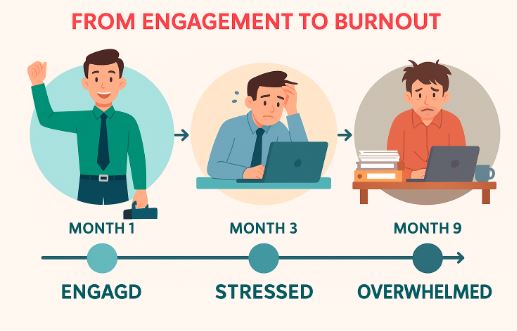
The momentum of job burnout signs only goes in one direction unless you actively interrupt it. The signals don’t get better on their own. They get worse, more entrenched, harder to reverse.
But here’s what gives me hope: every person I know who’s recognized these workplace burnout symptoms and taken action – even imperfect action – has told me it was the best decision they ever made. Not because the transition was easy, but because they got their life back.
Your job should enhance your life, not consume it. If you’re experiencing job burnout signs, you’re not being dramatic or ungrateful. You’re paying attention to information your body and mind are desperately trying to give you.
The question isn’t whether you can afford to make a change when you’re seeing clear signs of burnout at work. The question is whether you can afford not to.
Which of these burnout warning signs resonates most with your current experience? How long have you been ignoring workplace burnout symptoms in your own life?
You can also read internalized neglect ignoring body signals for a deeper perspective.
Learn more in 7 warning toxic mindset shouldnt ignore.